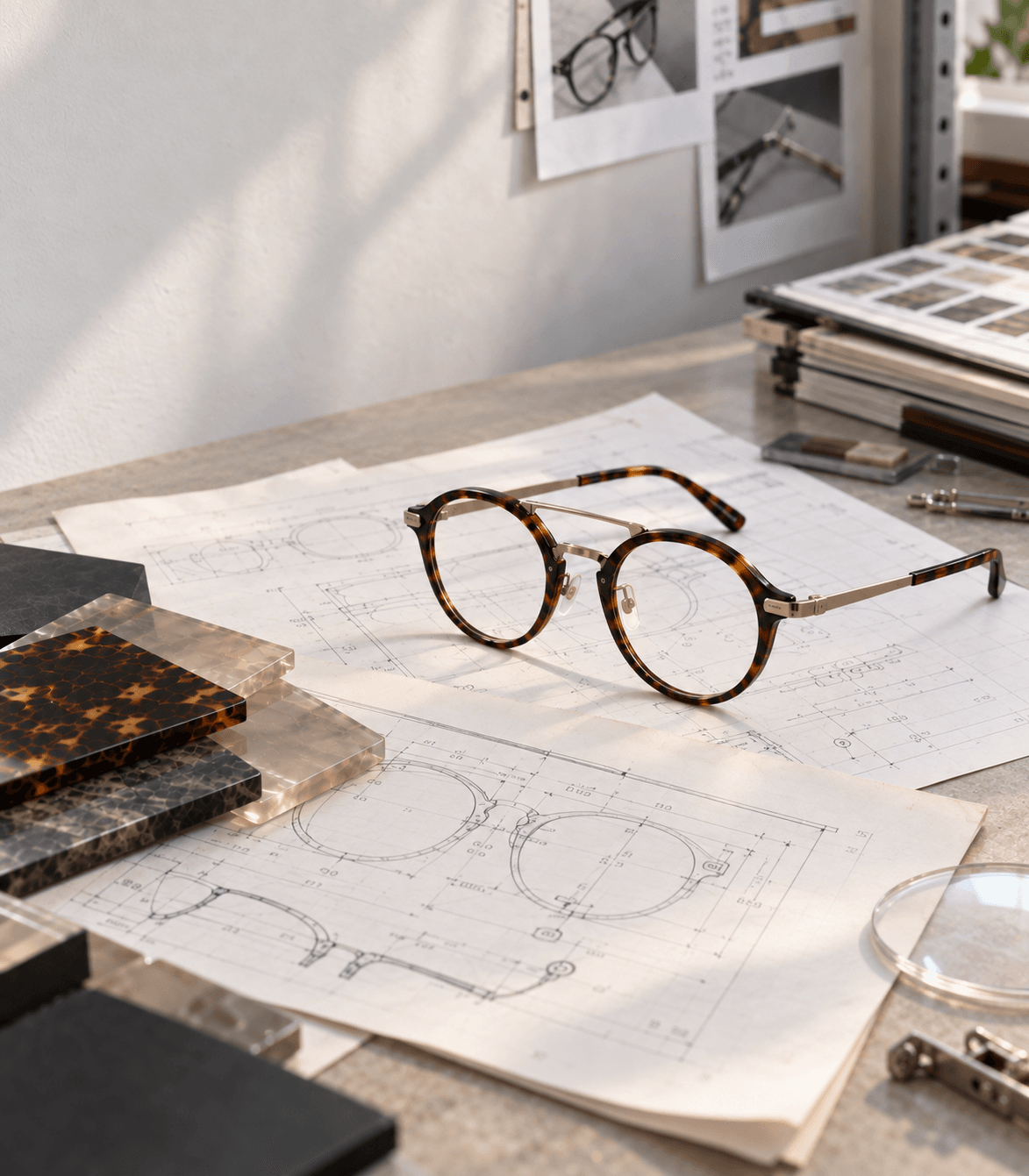
01 — Start from your design or physical sample
Share a drawing, reference image or physical sample. We review the material, construction and dimensions before agreeing the development and sampling scope.
Discuss your design
EYEWEAR DEVELOPMENT & MANUFACTURING
Start with a drawing, physical sample or one of our product examples. We support frame development, sampling and production, with materials and finishes reviewed for your design.
Discuss your projectTHREE WAYS TO BEGIN
Bring a drawing or sample, choose a product example, or discuss an existing design direction for private label.
Share a drawing, reference image or physical sample. We review the material, construction and dimensions before agreeing the development and sampling scope.
Discuss your design
Choose a LINGYA example, then discuss material, color, fit, branding and other details. Changes are reviewed against the frame construction; examples do not imply ready stock.
Explore product examples
Explore existing design directions for private label, then discuss materials, colors, finishes, logo and packaging. Design availability, customization, MOQ and timing are confirmed after project review; this does not imply ready stock. Customer designs and project information remain private.
Discuss private label requirementsAn agreed sample and specification guide production. Quality checks run throughout the process.
Share the frame direction, quantity, target market and preferred timing.
Review materials, construction and the changes needed before sampling.
Develop the agreed details and prepare samples for review.
Resolve revisions and approve the sample and final specification.
Confirm the order, color split, components and production schedule.
Manufacture to the approved sample and agreed specifications.
Check finished frames against the confirmed project requirements.
Pack to the agreed configuration and coordinate shipment.
Lenses and packaging are configured for the confirmed project, not a fixed package.
DEVELOPMENT TIMELINE
Sampling and bulk production are planned separately.
Sampling time is confirmed after review of the design, tooling and revisions required.
Typically 30–40 days after sample approval and confirmation of the final specifications and production order. Materials, construction, surface finishing, required processes and order requirements affect the final schedule. Shipping time is separate.
Around 300 pairs per style, with different colorways of the same style combined toward the total. The color split and final MOQ are confirmed after review of the material, construction, finish and order requirements.
Practical details to help you prepare the first conversation.
Yes. Our typical MOQ is around 300 pairs per style, counted across the colorways of that same style. It does not mean 300 pairs in every color. Share your preferred color split so we can confirm quantities against the material, finish and production requirements.
No. You can begin with a sketch, reference image, physical sample, product example or a short description. Include any dimensions or features that are important to you. We review what is available and identify what needs to be resolved for sampling.
Color, finish, branding, lenses and packaging can be reviewed around an existing frame. Changes to dimensions, material or construction may require additional development or tooling. We confirm the feasible scope before proceeding.
Acetate, titanium and metal frames are our main production focus. We also review other material directions on a project basis. Share the exact material and construction so availability and production suitability can be confirmed before sampling.
Sampling costs, tooling requirements and the scope of revisions are reviewed for the specific project before work begins. Share your requirements early so the quotation and development plan reflect the intended frame.
It refers to bulk production after the sample, final specifications and production order are confirmed. It does not include design development, sampling or shipping. Materials, construction, finishes and the required processes can change the schedule, which is confirmed for each order.
Yes. Share the lens specification, packaging references, artwork and destination market. We review compatibility, available options, quantities and timing, then confirm the agreed requirements with you.
Quality checks run from incoming materials and components through in-process inspection and finished-frame review. The approved sample and confirmed specifications guide the checks before packing and shipment. Project-specific inspection requirements should be discussed during technical review.
Send a reference or model number, the intended material, quantity per style and color split, target market and preferred delivery timing. Add lens, logo and packaging requirements where known. A complete specification is not required to start the discussion.
START A PROJECT
A drawing, reference image, physical sample or a few sentences are enough for an initial review.
Send a short inquiry