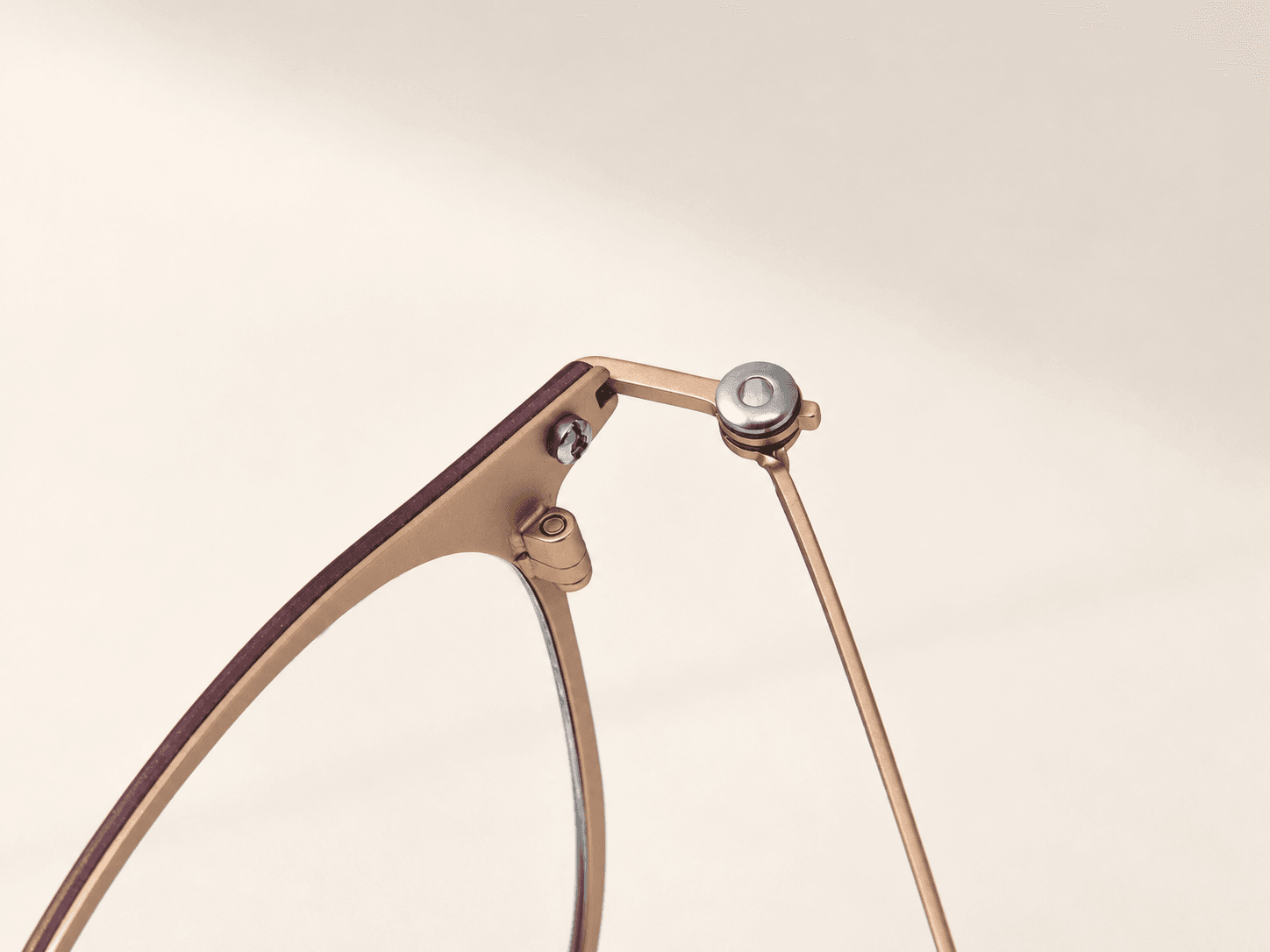
Eyeglass hinges for OEM frames should match the intended movement, frame material, and assembly method.
Start with a standard hinge when conventional opening and closing meets the brief. Consider a spring hinge when controlled outward travel is needed. Evaluate screwless designs as complete connection systems, not automatic upgrades. Then compare the cost of the installed assembly—not just the price of a loose component.
We can provide hinge structural solutions, or design hinges according to your specific requirements.
For eyewear brands, a smooth first opening is only the beginning. Before approving production, confirm how the hinge fits the frame, how the factory will assemble it, and how the finished product will be checked.
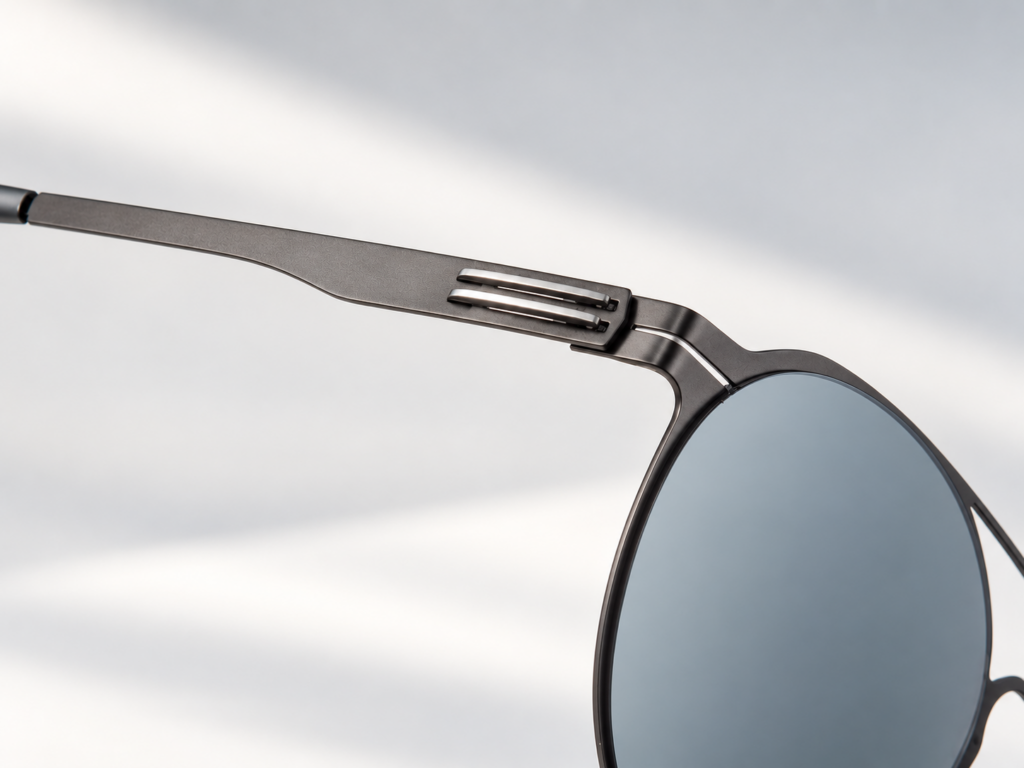

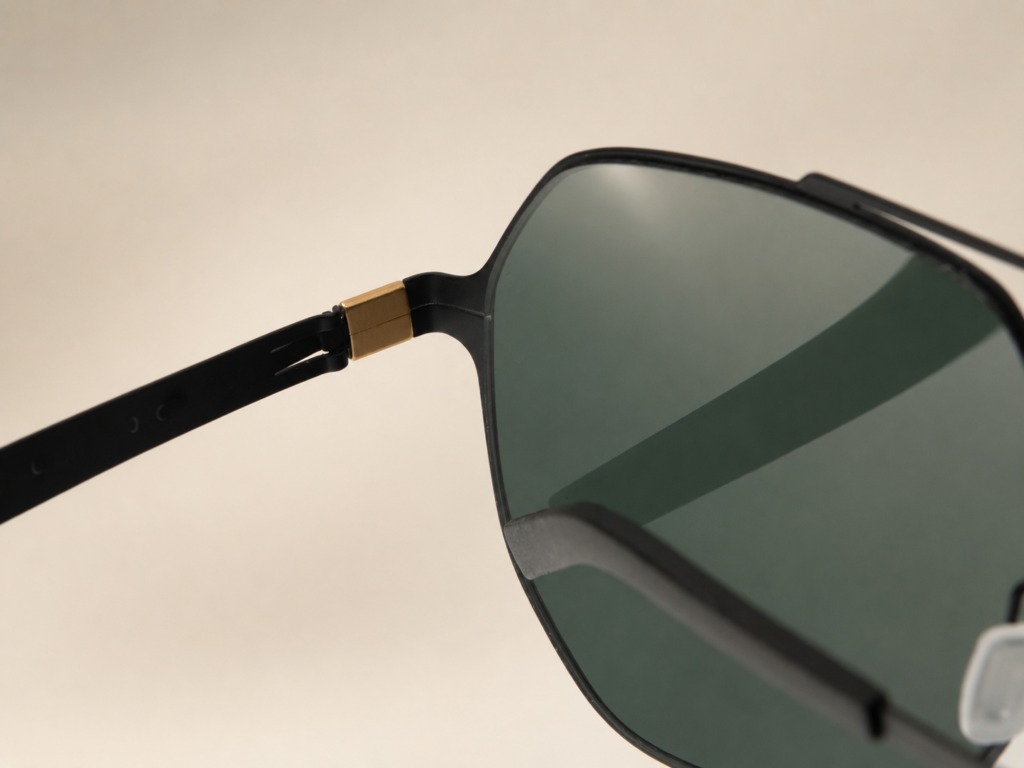
Types of Eyeglass Hinges: Standard, Spring, and Screwless
Standard hinges: look beyond the barrel count
Standard eyeglass hinges provide a pivot for opening and closing the temples without a separate spring-loaded extension mechanism. They come in different sizes and configurations, including assemblies that combine the hinge with a metal temple core for acetate frames. Visottica Group
For a frame that does not need extra outward travel, a suitable standard hinge is a sensible starting point.
When comparing three-, five-, or seven-barrel options, review the dimensions, material, matching hardware, and attachment method. Do not use barrel count as the only purchasing criterion.
On the assembled sample, check whether the joint moves consistently, whether there is unwanted play, and whether the hinge fits the intended temple thickness.
“Five-barrel hinge” describes a structure. It does not tell you whether the complete frame meets your requirements.
Spring hinges: define the extra movement
Spring hinges for eyeglasses allow the temples to move beyond their normal open position within a designed range. The spring resists that movement and helps return the temple when the load is removed. Google Patents
During sampling, ask the supplier to explain the available travel, return force, and space required for the mechanism. Then compare the left and right sides on the finished frame.
The approval should cover more than whether the temple springs back. Check the resistance during movement, the final resting position, and any unwanted looseness.
Also review frame width and temple shape. Do not use a spring mechanism as a substitute for checking the fit of the complete frame.
Screwless hinges: assess the whole connection
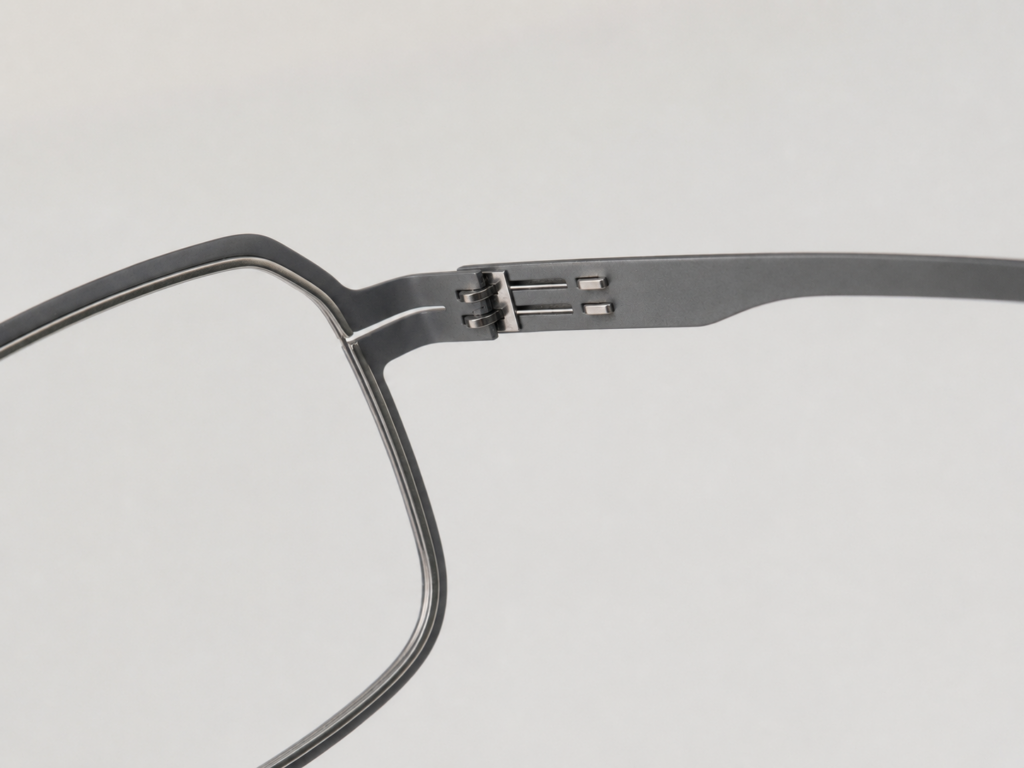
Screwless eyeglass hinges use alternative connection designs instead of a conventional hinge screw. Titanium spiral hinges are one example, with the material and geometry forming part of the working connection. LINDBERG
For an OEM project, ask how the system is assembled, what movement it permits, and how damaged components would be replaced.
Include connection security, wear, and unwanted movement in the sample review. Removing a screw does not remove the need to inspect the joint.
Choose a screwless design because it supports the product’s construction or appearance—not simply because the name sounds more advanced.
Match the Hinge to the Frame Material
Before choosing eyeglass hinges, review both sides of the connection: the front attachment and the temple attachment.
For acetate frames, evaluate the hinge and temple core together. Integrated hinge-and-core components are available, so the selection may involve more than the small joint visible at the temple’s end. Visottica Group
Ask the factory to confirm the mounting position, the space required, and the material remaining around the attachment. Inspect the inside of the sample as carefully as the outside.
For metal and titanium frames, confirm the joining method before approving the component. Ask for the exact hinge material, attachment geometry, and proposed joining process. Do not approve a substitute solely because it looks similar or fits the same space.
For injection-molded frames, assess a system intended for that construction. Some purpose-built hinges fit directly into a temple cavity through a press-fit connection. That is a different installation approach from selecting a conventional acetate assembly. Visottica Group
Review the frame closed, normally open, and extended where relevant. Check for interference, unintended contact, and access for assembly tools.
Resolve these details during OEM eyewear development, rather than leaving the hinge choice until the frame shape is already fixed.
A useful question at this stage is: Can this hinge work with the design without forcing changes to the temple thickness, front connection, or intended opening position?
What Drives the Cost of Eyeglass Hinges?
Start by making sure the quotations cover the same components and work. A lower unit price is not a saving if the other quote includes parts or assembly that the first one leaves out.
Complete assembly or separate components?
Some hinges can be supplied preassembled or as loose components. The choice changes how much assembly remains for the frame manufacturer. Visottica Group
Ask whether the quotation is per hinge or per pair. Confirm whether it includes both mating parts, the screw, any spring mechanism, and the required core or mounting components.
Then identify who handles installation, adjustment, and inspection. Compare the price of the complete installed assembly, not two different packages of parts.
Existing component or custom development?
A stock hinge and a custom connection are different purchasing decisions. Custom development can involve requirement review, prototypes, adjustments, and production preparation. Oberhausen
Request separate figures for recurring component costs and one-time development or tooling charges. Also confirm the quantity and finish assumed in the quotation.
For example, suppose a proposed frame needs a different attachment profile. Ask the supplier to explain the additional development and installation work rather than describing the change simply as a “premium hinge upgrade.”
What support will the collection need later?
Before approving a long-running collection, ask which parts can be replaced and how the supplier plans to support repeat orders.
Confirm the relevant part numbers, replacement procedure, and proposed spare-parts quantities. Do not assume that every spring or screwless assembly can be serviced in the same way.
Pay more for a defined benefit: the movement your design needs, a better-fitting assembly, or a practical replacement-parts plan. Complexity alone is not a benefit.
How to Check Eyeglass Hinges Before Production
Review samples after the intended assembly and finishing steps. A loose component cannot demonstrate the clearance, alignment, or attachment quality of the complete frame.
Use the following checklist to structure the sample discussion. Agree on the inspection methods and acceptance limits with the manufacturer before production.
| Review area | What to confirm |
|---|---|
| Opening and closing | Acceptable resistance, consistent behavior on both sides, correct resting positions, and no unintended binding or noise |
| Attachment and alignment | Secure connections, acceptable play, correctly seated hardware, and no unwanted contact between moving parts |
| Spring movement | Controlled outward travel, reliable return, and comparable behavior on the left and right sides |
| Condition after testing | Acceptable changes in movement, clearance, attachment security, and the surrounding finish |
Keep an approved sample as a reference, but support it with written requirements.
“Smooth” and “not too loose” are useful descriptions for an initial discussion. Before bulk production, agree on how the inspection team will assess those qualities and when a result should be rejected.
Include these requirements in the project’s eyewear quality control plan so sample approval and production inspection follow the same criteria.
Hinge Durability: Ask What the Cycle Count Measures
When a supplier quotes a durability cycle count, ask for the test conditions before treating the number as a purchasing advantage.
Was the test performed on a loose mechanism or an assembled frame? What movement, angle, and load were used? Did it include spring overextension? What changes were allowed afterward?
Use those answers to decide whether two results are comparable. Do not assume that a higher number means better performance when the test methods and failure criteria differ.
ISO 12870:2024 specifies requirements and test methods for unglazed spectacle frames designed for prescription lenses. Its scope concerns frames, so a hinge-only result does not establish that a complete frame meets all applicable requirements. Confirm the relevant frame-level testing and any additional hinge checks for the project. ISO
The useful result is evidence that the tested assembly meets a defined requirement—not simply a large number on a specification sheet.
Record the Approved Parts Before Placing the Order
Once the sample is approved, record the hinge model or drawing, material, finish, matching hardware, and attachment method.
Include the intended opening position, any permitted extra travel, and the agreed inspection requirements. Keep this information with the approved physical sample.
The sample communicates appearance and feel. The written specification identifies the parts and details needed to reproduce it.
Require approval before substitutions to the hinge, screw, spring mechanism, or mounting method. When a replacement is proposed, review its effect on assembly and performance rather than accepting it because the outside looks similar.
For repeat orders, ask the factory to confirm that it is using the approved component specification. Resolve proposed changes before production begins.
Choosing Eyeglass Hinges for Your Next Collection
For OEM eyewear, the right hinge provides the required movement, fits the frame construction, and can be assembled and checked consistently.
Start with the simplest suitable option. Add a spring mechanism, a screwless connection, or a custom detail when the product has a clear reason for it.
To discuss eyeglass hinges for your OEM project, share your drawing or reference sample with LINGYA OPTICAL. Include the front and temple materials, preferred opening feel, whether extra outward travel is needed, and expected order quantity.
Those details give the factory a clearer starting point than a request for a “premium hinge”—and help resolve the important decisions before sampling.