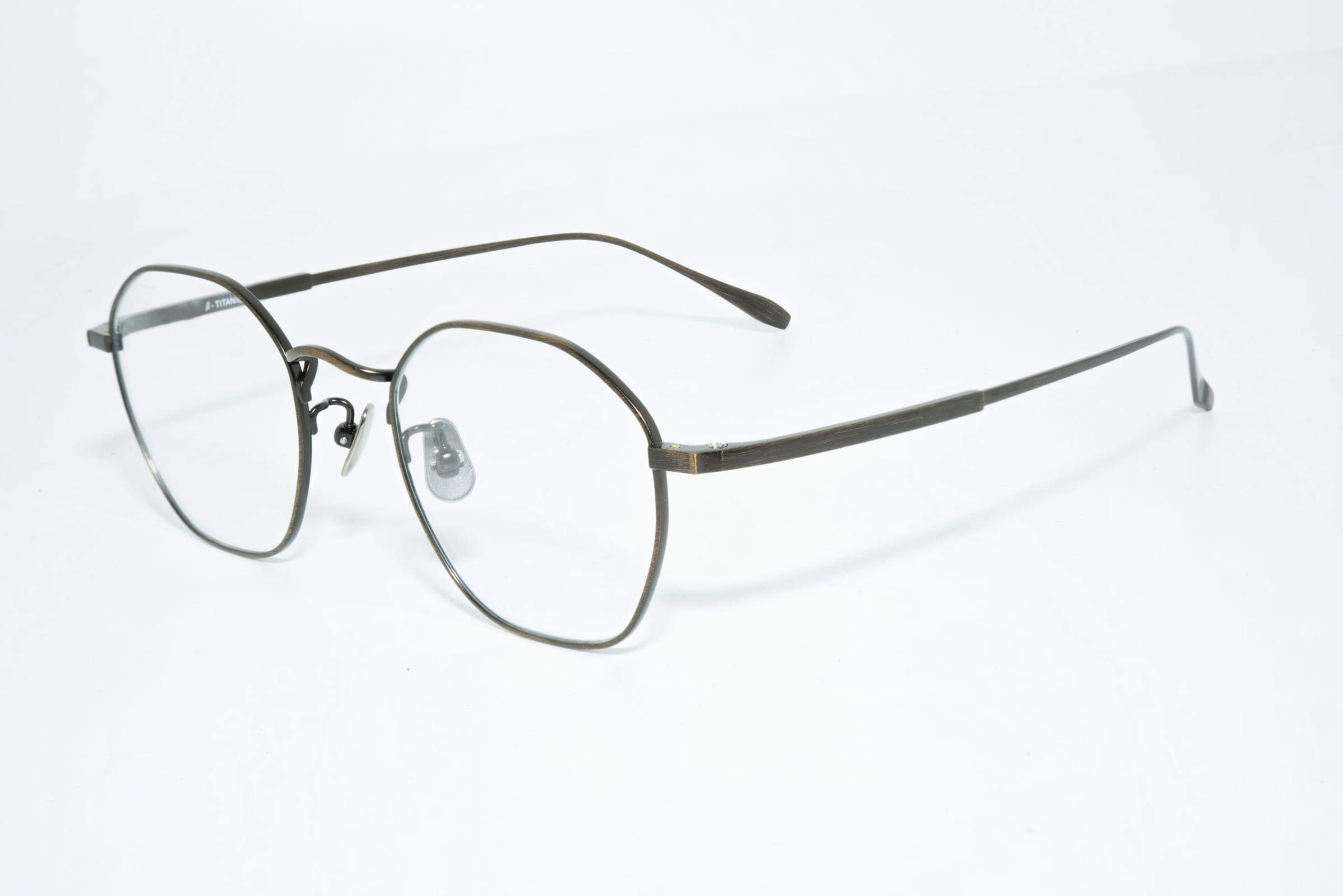
Pure titanium offers low weight, corrosion resistance, and good formability. Suitable beta titanium grades are particularly useful for slim components that need high strength and elastic recovery, especially temples. In production, the differences show up in forming springback, material condition, and heat exposure during later operations. The price gap depends on the alloy, component design, and processing requirements. A beta titanium frame is not necessarily more expensive than a pure titanium one. 1 2
Beta titanium eyeglass frame with round bronze-colored rims
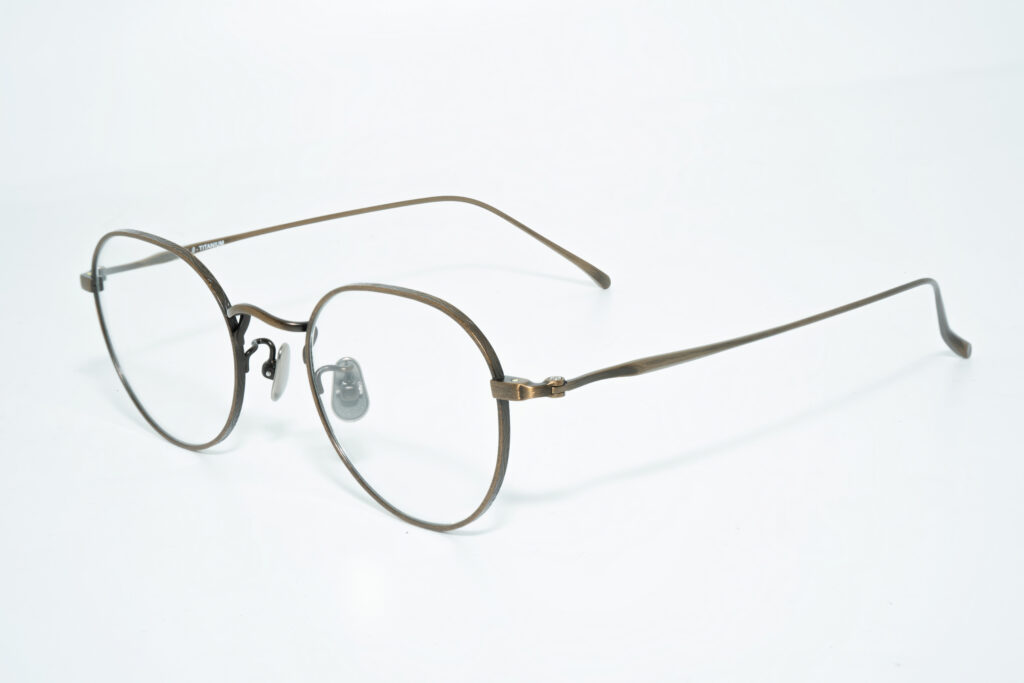
Round beta titanium frame with textured rims and slim temples.
Start with the grade and the component
In eyewear, “pure titanium” generally means commercially pure titanium, or CP titanium. Its grades allow different amounts of elements such as oxygen and iron, which affect strength and formability. Two materials sold as pure titanium can therefore behave differently in production. 3
Beta titanium is a family of titanium alloys named for their metallurgical structure. Alloy composition and processing determine their properties. One example used for eyewear rims and temples is Ti-15V-3Cr-3Sn-3Al. The word “beta” describes the alloy type; it does not indicate higher titanium purity. 1 2
For a sourcing specification, record the exact grade, the condition in which the material is supplied, and the components it covers. A frame may combine a pure titanium front with beta titanium temples. A beta titanium marking on a temple does not establish the material of the front, hinges, or screws.
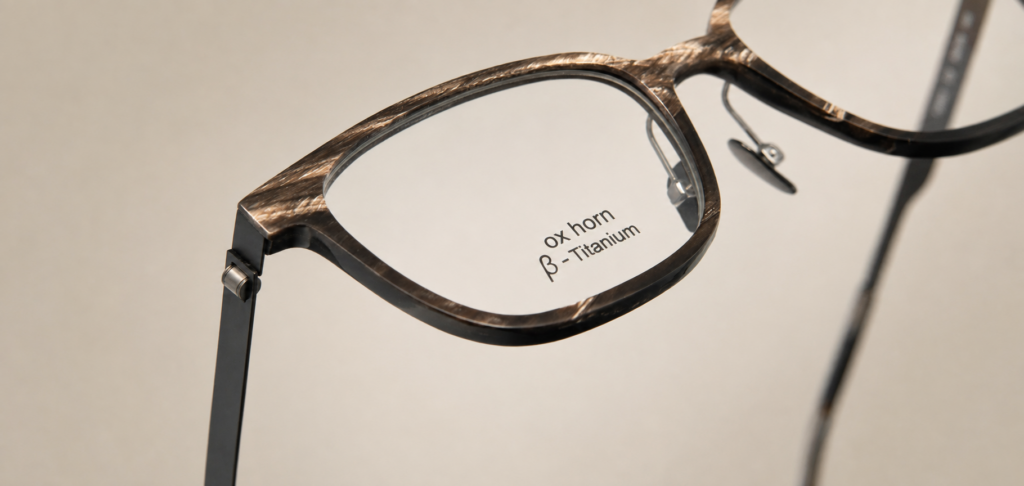
Why beta titanium works well in temples
Temple flexibility depends on the alloy, along with the temple’s length, width, and thickness. A well-designed temple needs enough flex for comfort while maintaining its shape during normal use.
Selected beta titanium grades combine high strength with a low elastic modulus. That gives designers room to develop slender temples that flex during wear and recover when the load is removed. 2
Comfort still comes from the complete design. Front width, temple curvature, opening angle, and the wearer’s head width all matter. A short, thick beta titanium temple will feel different from a long, thin one made from the same material.
Pure titanium remains a useful choice where low weight, corrosion resistance, and formability matter more than a pronounced flexible section. 1 Common eyewear beta titanium alloys are also distinct from nickel-titanium memory alloys: elastic recovery has a working range, beyond which a component can retain a bend or fail. 2 5
Beta titanium eyeglass frame with softly angular rims and slim temples
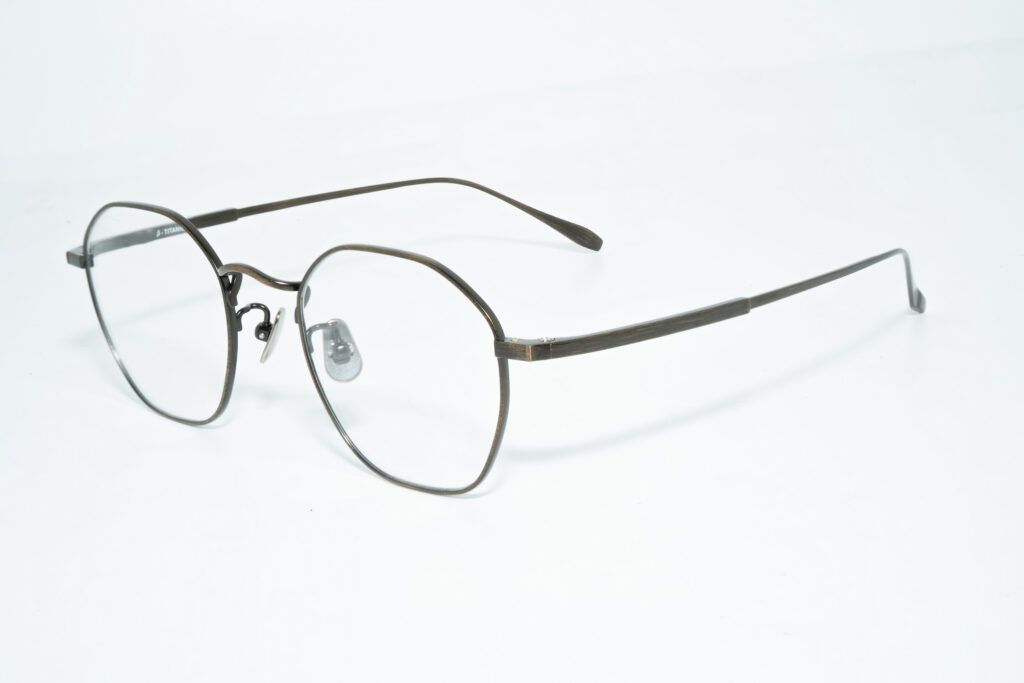
A softly angular beta titanium frame. Temple length, curvature, and cross section are part of the design specification.
A lighter frame comes from the design, too
Beta titanium is not inherently less dense than pure titanium. Commercially pure titanium has a density of approximately 4.51 g/cm³, while the beta alloy TIMETAL 15-3 is approximately 4.78 g/cm³. In this comparison, the beta alloy is slightly denser. 3 4
Its properties may, however, allow a designer to use a thinner or narrower section while meeting the frame’s strength and service requirements. The resulting component can weigh less because it uses less material.
When comparing samples, use the same configuration—with or without lenses, temple tips, and other components—and weigh the complete frame. The material name alone does not tell you how much the finished frame will weigh.
What changes in manufacturing
Both materials may go through cutting, forming, joining, polishing, finishing, and assembly. The sequence depends on the construction. Changing the material means reviewing the conditions within those operations.
Forming and springback
The angle formed in a tool may differ from the angle left after release. For both pure titanium and beta titanium, forming parameters should account for springback, the material grade, thickness, and bend location. 6
If an existing pure titanium temple is changed to beta titanium, check the finished curvature, opening angle, and left-to-right consistency, even when the drawing is unchanged.
Some beta titanium grades, such as DAT51, offer good cold formability. Even with these grades, the forming process still needs to account for springback. 7
Material condition and heat exposure
The properties of beta titanium can change depending on its processing and heat treatment. Some grades require additional heat treatment, while others rely on their supplied condition and cold working. These factors need to be considered during manufacturing to maintain consistent strength, flexibility, and dimensions. 2 4
Joining and connection details
Bridges, rims, and endpieces carry loads during assembly and use. Welding or brazing methods must suit the material and construction, with appropriate joint preparation, protection, and heat control. Titanium is sensitive to atmospheric and surface contamination at elevated temperatures, which can impair joint properties. 8
For flexible components, evaluate the connection and the material around it. Surface preparation and welding conditions can affect joint strength and its consistency, so a clean-looking joint is only part of the assessment. 9

Polishing and surface finishes
A black, gold, or brushed finish may call for different preparation on pure titanium and individual beta titanium alloys. Coating adhesion and gloss can vary with the alloy and treatment method. 10
For flexible temples, inspect the finish for cracking or peeling after flexing through the intended range. Polishing should preserve the specified section and edge shape, especially around thin areas and connections.
Agree on materials and finishes alongside the construction, then carry those decisions into the production process.
Where the cost difference comes from
Titanium generally starts with a higher raw material cost by weight than common steel and stainless steel options. 1 The finished frame price also reflects how much material is used and the work required to turn it into a consistent product.
When comparing pure titanium and beta titanium quotes, review four areas:
- Material specification. Grade, supplier, sheet or wire dimensions, supplied condition, and purchase quantity affect sourcing costs. Two quotes labeled “beta titanium” may cover different materials.
- Geometry and tooling. Thin flexible sections, changing cross sections, and complex connections can add machining, forming, or fixture requirements. Using less material does not necessarily make a component cheaper to produce.
- Surface requirements. Multiple color zones can add masking, processing, rework, and inspection compared with a single finish. Those costs belong to the design specification.
- Production consistency. Tool trials, process validation, and agreed inspections help translate an approved sample into repeatable dimensions, function, and appearance across the order.
Ask the supplier to connect the price difference to the changed specification, added operations, and improvement you can confirm in the finished frame.
Choosing a material for your next collection
| Design priority | Material direction to evaluate | Sample review focus |
|---|---|---|
| A lightweight metal frame with a defined shape and everyday comfort | Pure titanium | Front and temple profiles, total weight, assembly, and adjustment |
| Slender temples with controlled elastic flex | A suitable beta titanium grade and condition | Opening angle, force needed to flex, recovery, and connections |
| A defined front shape with more flexible temples | Pure titanium front with beta titanium temples | Connections, finish consistency, and overall balance |
Before production, document material grades and their locations, critical dimensions, temple geometry, finish references, and any required functional testing. Align incoming, in-process, and final quality checks with that specification and the approved sample.
Developing a titanium eyewear collection? Share your drawing, reference sample, or project brief with LINGYA OPTICAL. Include your target weight, preferred temple feel, quantity, and finish so the material and construction can be reviewed before sampling.
Technical references
- Nippon Steel — Titanium characteristics
- KOBELCO — Titanium for eyeglass frames
- TIMET — Titanium alloys technical manual
- TIMET — TIMETAL 15-3 data sheet
- Daido Steel — Shape memory and superelastic titanium alloys
- TIMET — Titanium design and fabrication handbook
- Daido Steel — High-strength titanium alloys
- TWI — Welding of titanium and its alloys Part 1
- Japan Welding Society — Study of micro laser welding for titanium eyewear
- Fukui Optical Association — Surface treatment development